
Best Car Insurance Companies of 2026
Finding the right car insurance shouldn't be overwhelming. We've analyzed 50+ car insurance providers to help you compare coverage, understand costs, and choose protection that actually fits your driving needs and budget.
We analyzed 50+ car insurance companies and collected 312 quotes across 8 driver profiles in 15 states, comparing the premiums drivers actually pay against advertised rates. We also reviewed 14,000+ J.D. Power survey responses and NAIC complaint ratios. These 6 insurers consistently deliver the best combination of pricing, coverage, and claims satisfaction.

Farmers
#1Farmers Insurance offers auto coverage through a network of local agents. The Signal® safe driving program monitors driving habits and offers discounts up to 30% for safe drivers. Farmers has operated for over 90 years and offers bundling options with home and renters insurance. Local agent support is available, though premiums may be higher than digital-first competitors. Policyholders who switched report saving up to $550 a year.
Pros
- ✓90+ years in the insurance industry
- ✓Signal® app offers safe driving discounts up to 30%
- ✓Local agents available for in-person support
- ✓Multiple coverage options available
- ✓Accident forgiveness and new car replacement available as add-ons
Cons
- ✗Some discounts require bundling with other policies
- ✗Not available in all states
- ✗Higher premiums than some digital-first insurers

GEICO
#2GEICO is the second-largest auto insurer in the U.S., with more than 28 million policyholders, and uses that scale to offer some of the lowest premiums available. The online quote takes under 15 minutes and the app handles most policy changes. There are no local agents, so claims and service go through call centers or the app. Drivers who want a personal relationship with an agent or heavy coverage customization may find the options limited; drivers who want solid coverage at the lowest price rarely do.
Pros
- ✓Among the lowest average premiums in the industry
- ✓Online quotes in under 15 minutes and an easy-to-use app
- ✓Backed by Berkshire Hathaway with an A++ AM Best rating
- ✓Wide range of discounts, including military, federal employee and good student
- ✓DriveEasy telematics app rewards safe driving with further discounts
Cons
- ✗No local agents; all service is by phone or online
- ✗Fewer coverage customization options than agent-based insurers
- ✗Claims can feel impersonal without a dedicated point of contact

Progressive
#3Progressive accepts drivers that other insurers may decline, making it an option for those with less-than-perfect driving records. The Snapshot program monitors driving habits and can provide discounts for safe driving. The Name Your Price tool helps find coverage within a specified budget. Customer service and agent availability vary by location.
Pros
- ✓Name Your Price tool helps find coverage within budget
- ✓Snapshot program monitors driving for potential discounts
- ✓Accepts drivers with less-than-perfect records
- ✓Pet injury coverage available
- ✓Available in all 50 states
Cons
- ✗Rates may be higher for some driver profiles
- ✗Customer service experiences vary
- ✗Limited local agent availability

State Farm
#4State Farm is one of the largest auto insurers in the U.S. with local agents in most communities. Bundling auto with home or renters insurance provides discounts. The Drive Safe & Save program uses telematics to track driving and may reduce premiums. Rates vary by state, and some customers report longer claims processing times compared to digital-focused insurers.
Pros
- ✓Large network of local agents nationwide
- ✓Drive Safe & Save telematics program
- ✓Bundling discounts with home and renters insurance
- ✓Rideshare coverage available
- ✓Steer Clear program discounts drivers under 25 who complete its safe driving course
Cons
- ✗Rates vary significantly by state
- ✗Mobile app functionality is limited
- ✗Claims process may take longer than digital competitors

USAA
#5USAA offers auto insurance exclusively to active military, veterans, and their immediate families. Eligible members have access to competitive rates and military-specific benefits including coverage during deployment. USAA operates primarily online and by phone with limited physical locations. The general public is not eligible for USAA membership.
Pros
- ✓Competitive rates for eligible members
- ✓High customer satisfaction ratings
- ✓Military-specific benefits including deployment coverage
- ✓Accident forgiveness available
- ✓Discounts for garaging a vehicle on base and for storing a car during deployment
Cons
- ✗Eligibility limited to military members, veterans, and families
- ✗Very limited physical locations
- ✗Not available to the general public

Allstate
#6Allstate offers auto insurance with accident forgiveness, which prevents rate increases after a first at-fault accident. The Drivewise program monitors driving behavior for potential discounts. Deductible rewards reduce deductibles for each claim-free year. Premiums tend to be higher than competitors, and roadside assistance is an additional cost.
Pros
- ✓Accident forgiveness prevents rate increase after first at-fault accident
- ✓Drivewise program offers safe driving discounts
- ✓Deductible rewards for claim-free years
- ✓New car replacement coverage available
- ✓Milewise pay-per-mile option for drivers who rarely use their car
Cons
- ✗Premiums higher than industry average
- ✗Policy options can be complex
- ✗Roadside assistance requires additional fee
Also evaluated: Nationwide, Liberty Mutual, Travelers, American Family, Lemonade, Erie, Auto-Owners and Amica.
Quick Comparison
Swipe left to see the full table →
| Provider | Avg. Monthly | Rating | AM Best | Telematics | Service | Best For | |
|---|---|---|---|---|---|---|---|
| #1 Farmers | $89 | 4.9 | A | Signal | Local agents | Best Overall Value | Get Quote |
| #2 GEICO | $65 | 4.8 | A++ | DriveEasy | Phone and app only | Affordable Rates | Get Quote |
| #3 Progressive | $140 | 4.7 | A+ | Snapshot | Independent agents | High-Risk Drivers | Get Quote |
| #4 State Farm | $135 | 4.6 | A++ | Drive Safe & Save | Local agents | Bundling Options | Get Quote |
| #5 USAA | $95 | 4.5 | A++ | SafePilot | Phone and app only | Military Members Only | Get Quote |
| #6 Allstate | $155 | 4.4 | A+ | Drivewise | Local agents | Accident Forgiveness | Get Quote |
Average monthly premium is the mean full-coverage quote across our 8 driver profiles. Your rate will differ by state, record and vehicle.
Car Insurance Buying Guide: Everything You Need to Know About Getting Car Insurance
What each coverage does, what you should be paying in 2026, how much protection you actually need, and how to cut the bill without leaving yourself exposed.
How a Car Insurance Policy Is Built
A policy is a bundle of six separate coverages, each with its own limit and price. When two quotes look wildly different, they are almost never covering the same things.
• Bodily injury liability (required in 48 states): injuries you cause to other people. Medical bills, lost wages, legal defense. About a third of the premium.
• Property damage liability (required in 48 states): damage you cause to other people's cars and property. 10-15% of the premium.
• Collision (required only if financed or leased): repairs to your own car after a crash, whoever is at fault. About a third of the premium, and the part your deductible applies to.
• Comprehensive (required only if financed or leased): theft, hail, flood, fire, vandalism, glass, animal strikes. 10-15% of the premium, and usually the better value of the two.
• Uninsured and underinsured motorist (required in about 20 states): your injuries when the at-fault driver has no insurance or too little. 5-10% of the premium.
• PIP or MedPay (PIP required in no-fault states): medical costs for you and your passengers regardless of fault. 5-15% of the premium.
Liability limits are written as three numbers. 100/300/100 means $100,000 per injured person, $300,000 per accident and $100,000 for property damage. "Full coverage" is not a legal term; it just means liability plus collision and comprehensive, and says nothing about whether the limits are adequate.
What Should You Actually Pay? (2026 US Averages)
After rising 46% between 2022 and 2024 and then falling 6% in 2025, car insurance prices have roughly leveled off. Insurify's mid-2026 tracking puts the national average full-coverage premium at $2,237 a year, or about $186 a month. Liability-only coverage averages $98 a month. Analysts expect the year to close about 1% higher, with 32 states finishing up and the rest flat or down.
By age, the curve is steep at the young end and nearly flat after 30. Approximate full-coverage annual premiums:
- Age 16-19 on their own policy: $5,000-$7,500 (adding a teen to a parent's policy is far cheaper, typically $1,500-$3,000 more)
- Age 20-24: $3,000-$3,800
- Age 25-34: $2,300-$2,600
- Age 35-64: $2,000-$2,300
- Age 65 and over: $2,100-$2,400, rising again after 75
By state, the spread is more than two to one:
- Washington, D.C. is the most expensive place to insure a car at about $3,955 a year, with Maryland, Rhode Island, New York and New Jersey (each roughly $2,900) close behind. Connecticut is rising fastest, up about 15% this year.
- New Hampshire, Vermont, Idaho, Ohio and Maine are the cheapest, typically $1,200-$1,500 a year. New Mexico is heading down to about $1,587.
The six insurers on this page quoted our sample profiles between $65 (GEICO) and $155 (Allstate) a month for full coverage. That gap, for identical drivers and identical coverage, is the single most important number on this page. Where you live sets the range, but which company you pick decides where in the range you land.
Use these figures as a benchmark. If a quote comes in more than 20% above the average for your age and state, something in your profile is being priced heavily, and another insurer will very likely weigh it differently.
How Much Coverage Do You Actually Need?
Most drivers set their limits once, by picking whichever option makes the premium acceptable, and never look again. The limits are the policy. Everything else matters less than whether the numbers are big enough on the day you need them.
• Start with liability, because it is the one that can ruin you. A 25/50/25 state minimum is not remotely adequate: one overnight hospital stay with surgery clears $25,000, and so does a totaled SUV. Whatever the policy does not cover comes out of your savings, your home equity and your future wages.
• Reasonable liability targets:
- Minimal assets, older vehicle: 50/100/50, about $5-$15 a month over state minimum
- Typical household with savings: 100/300/100, about $15-$30 a month over minimum
- Homeowner with meaningful assets: 250/500/100 plus a $1 million umbrella, about $25-$45 a month over minimum, and $150-$300 a year for the umbrella
• Match uninsured motorist coverage to your liability limits. Roughly one in seven drivers has no insurance at all, and far more carry only the minimum. If one of them puts you in hospital, this is the coverage that pays. It is cheap.
• Keep collision and comprehensive on any car worth more than about $8,000, and on any car with a loan or lease, where the lender requires both. Below that value, use the 10% rule in the next section.
• A sensible default for a household with a mortgage, some savings and two cars: liability 100/300/100, uninsured motorist 100/300, collision and comprehensive with a $1,000 deductible, MedPay of $10,000 if you have a high-deductible health plan, and a $1 million umbrella if you own property.
The jump from state minimum to 100/300/100 costs far less than people expect because catastrophic claims are rare. You are buying a lot of protection at the cheap end of the curve. For a longer walkthrough, see how much car insurance you actually need.
Minimum vs. Full Coverage: When Each Makes Sense
The national gap between liability-only and full coverage is about $88 a month ($98 against $186). That money buys repairs or replacement of your own car. Whether it is worth paying depends entirely on what the car is worth.
Full coverage makes sense when:
- The car is financed or leased (the lender will require it anyway)
- The car is worth more than about $8,000 and you could not comfortably replace it from savings
- You live where hail, flooding or theft are common, which makes comprehensive the more valuable half
Liability-only makes sense when:
- The car is paid off and worth less than about $4,000-$5,000
- You have enough savings to replace it without borrowing
- The annual cost of collision and comprehensive is approaching 10% of the car's value
The 10% rule in practice: a car worth $3,000 with collision costing $500 a year and a $1,000 deductible can never pay out more than $2,000. You would be paying a quarter of the maximum payout every year. Drop collision first. Comprehensive is usually much cheaper and covers the events that total a car outright, so it is often worth keeping on its own for another year or two.
"Liability-only" should never mean "state minimum only." Carry the higher liability limits above even on a car you would not bother to repair. The car is the cheap part; the lawsuit is not.
Choosing Your Deductible: The Cost-Benefit Breakdown
• The deductible applies only to collision and comprehensive, so it moves only that part of the bill, roughly 40-50% of a full-coverage premium. Here is the math on an average $2,237 policy:
• $250 Deductible
- Annual premium: ~$2,400 ($200/month)
- Out-of-pocket per claim: $250
- Best for: little or no emergency savings, newer car, frequent city driving
• $500 Deductible (Most Common)
- Annual premium: ~$2,237 ($186/month)
- Out-of-pocket per claim: $500
- Savings vs. $250: $160/year
- Best for: most drivers, balanced approach
• $1,000 Deductible
- Annual premium: ~$2,030 ($169/month)
- Out-of-pocket per claim: $1,000
- Savings vs. $250: $370/year
- Best for: $1,000 or more in savings, clean record, older car
• $2,000 Deductible
- Annual premium: ~$1,900 ($158/month)
- Out-of-pocket per claim: $2,000
- Savings vs. $250: $500/year
- Best for: solid emergency fund, rarely files claims, would pay for small damage anyway
• Break-even: moving from $500 to $1,000 saves about $200 a year and costs an extra $500 the day you claim. Go more than two and a half years between claims and the higher deductible wins. Most drivers do.
• Two refinements: you can set a lower deductible on comprehensive than on collision, because glass and hail claims are small and common. And Allstate's Deductible Rewards takes $100 off your collision deductible for every claim-free year, up to $500.
The only wrong answer is a deductible you could not pay tomorrow. If a $1,000 repair would go on a credit card at 24% interest, keep the $500 deductible and take the $200 hit.
What Actually Drives Your Rate
Insurers price on how likely you are to file a claim and how expensive it will be. Some of that you cannot change; a surprising amount you can. Approximate effect of each factor on a full-coverage premium:
- Location: ZIP code sets the baseline through theft, weather, traffic density, repair costs and the state's legal climate. Moving across a city line can change the premium by 10-20%; moving states can double it.
- Driving record: a speeding ticket adds roughly 20-25% for three years. An at-fault accident adds 40-50%. A DUI can add 70-90% and stays on the rating record for five years or more, plus SR-22 filing in many states.
- Credit history: in the 46 states that allow it, a driver with poor credit pays roughly double what a driver with excellent credit pays, all else equal. California, Hawaii, Massachusetts and Michigan prohibit or heavily restrict its use. Improving your score from "fair" to "good" is worth shopping over.
- Age and experience: the biggest factor under 25. Rates fall sharply at 25 and again around 30, then creep up after 70.
- The vehicle: repair cost, theft rate and injury outcomes. Sensors, cameras and LED headlights have pushed repair costs up 45% in a few years, which is why a mid-size SUV with driver-assistance features can cost more to insure than an older luxury sedan. Check a model's insurance cost before you buy the car, not after.
- Annual mileage: under about 7,500 miles a year earns a low-mileage discount of 5-15% at most insurers. If you started working from home and never told your insurer, you are still rated on the old commute.
- Coverage choices: limits, deductibles and add-ons. This is the only factor you control completely, and it is covered above.
- Gaps in coverage: even a short lapse flags you as higher risk and raises quotes for up to three years. Never cancel the old policy before the new one starts.
Insurers weight these factors differently, which is why the same driver gets quotes 50% apart. A carrier that is harsh on credit may be lenient on a single ticket, and vice versa. Every profile has a carrier that likes it best; the only way to find it is to quote several.
Discount Stacking: How to Save $500-$1,000 a Year
• Discounts are applied one after another, not added up, and most insurers cap the total around 40-50%. On a $2,237 policy, here is what each one is worth:
- Bundle with home or renters: 10-25%. Both policies with the same carrier.
- Telematics / safe driver: 5-30%. Enroll in the app and drive smoothly for one policy term.
- Multi-car: 8-25%. Two or more vehicles on one policy.
- Good student: 8-25%. Driver under 25 with a B average or better.
- Low mileage: 5-15%. Under about 7,500 miles a year. Update your estimate if you drive less than you used to.
- Pay in full: 5-10%. Pay the six-month or annual premium up front.
- Defensive driving course: 5-10%. Approved online course, about $25 and four hours. Some states limit it to drivers over 55.
- Paperless, autopay, early quote: 1-5% each. Tick the boxes at checkout and quote at least a week before your current policy ends.
- Affinity and occupation: 2-15%. Military, federal employees, teachers, nurses, engineers, alumni groups. GEICO and USAA lead here.
• Worked example: a two-car household bundling with home insurance (15%), enrolling both drivers in telematics (12%), paying annually (7%) and going paperless with autopay (3%) takes a $2,237 premium to about $1,480. That is roughly $750 a year. Add a good-student teen and a low-mileage second car and $1,000 is reachable.
Discounts are not automatic. Insurers apply the ones they can see and skip the ones you did not mention. Ask for the full list at every renewal, and re-check the mileage, the student's grades and whether anything changed at work.
Telematics: Is Letting Your Insurer Watch You Drive Worth It?
Every insurer on this page runs a usage-based program. A phone app or plug-in device records hard braking, rapid acceleration, speed, time of day, mileage and, increasingly, phone handling while the car is moving. Drive well for a policy term and the discount lands at renewal.
- Farmers Signal: 5% for signing up, up to 30% at renewal; drivers under 25 get a separate rating
- GEICO DriveEasy: up to 25% in most states; scores phone use heavily
- Progressive Snapshot: average saving of about $230 a year for participants; one of the few that can raise your rate for poor results
- State Farm Drive Safe & Save: up to 30%; discount only, no surcharge
- USAA SafePilot: up to 30%, with a 10% enrollment discount in many states
- Allstate Drivewise: up to 40% in some states; Milewise is a separate pay-per-mile option for people who drive under about 5,000 miles a year
Who should opt in: commuters on open roads in daylight, people who drive under 10,000 miles a year, and anyone who genuinely does not touch their phone in the car. Who should not: shift workers driving between midnight and 4 a.m. (scored as high risk everywhere), stop-and-go city drivers (frequent braking events), and drivers of cars with aggressive automatic braking systems, which register as hard stops.
Almost every program lets you see your score before it affects the price. Enroll, check the app after six weeks, and drop out before renewal if it is working against you. The data is usually not shared beyond the insurer, but read the privacy terms if that matters to you.
Bundling Auto with Home or Renters: Actual Dollar Savings
Bundling is the largest single discount and the most misunderstood. The discount applies to both policies, so the saving is bigger than it looks, but it is only a saving if the bundled total beats the two best standalone quotes.
The math for an average household (auto $2,237, home $2,543, total $4,780 unbundled):
- Bundle discount of 10% on both: saves $478 a year
- Bundle discount of 20% on both: saves $956 a year
- Renters instead of home: the renters policy is only $15-$25 a month, but the auto discount alone is usually worth $100-$250 a year, so the renters policy often pays for itself
Who bundles best: Farmers, State Farm and Allstate underwrite home and auto themselves and offer the deepest bundles, typically 15-25%. USAA is around 10% but starts from low rates. GEICO and Progressive mostly sell home insurance through partner carriers, so the discount is smaller and the home policy is serviced by a different company.
The trap: a 20% bundle discount from a carrier whose base auto rate is 30% above market is a loss. Get the bundled quote, then get the two cheapest standalone quotes for the same coverage, and compare totals. Bundling also makes you slower to switch, which insurers know; re-check the bundle every two years like any other policy.
Add-Ons: Which Are Worth It and What They Cost
Every insurer sells a menu of extras at checkout. A few are excellent value for specific people; several are routinely oversold.
- Gap insurance ($20-$60 a year from your insurer): pays the difference between the loan balance and the car's value if it is totaled or stolen. Essential if you put less than 20% down or financed over 60 months or longer. Buy it from the insurer, not the dealer, where the same coverage costs $400-$700 as a one-time fee rolled into the loan. Drop it once you owe less than the car is worth, usually around year three.
- Rideshare coverage ($6-$30 a month): a personal policy stops covering you the moment you switch on the Uber or Lyft app, and the platform's own coverage has gaps while you wait for a ride. Anyone who drives for a platform even occasionally needs this. Progressive, State Farm, Farmers, Allstate and USAA all offer it; GEICO offers a separate hybrid policy in some states.
- Accident forgiveness (3-10% of premium, or free after several claim-free years): prevents the 40-50% surcharge after your first at-fault accident. Allstate includes it in its higher tiers; Farmers, USAA, Progressive and GEICO offer versions. Worth it for young drivers and anyone on a tight budget; for a driver with a 10-year clean record it often costs about what the surcharge would.
- New car replacement (about 5-10% on top of collision): replaces a totaled car with a brand new equivalent instead of paying depreciated value, usually if the car is under one or two years old. Useful in year one, when depreciation is steepest; drop it after that. Farmers, Allstate and USAA offer it.
- Rental reimbursement ($30-$60 a year): pays for a hire car while yours is being repaired, typically $30-$50 a day for up to 30 days. Worth it if you have one car and no alternative; skip it if you have a second vehicle.
- Roadside assistance ($15-$60 a year): towing, jump starts, lockouts. Check first: many credit cards, new-car warranties and auto club memberships already include it.
- OEM parts endorsement (5-15% on collision): forces repairs with manufacturer parts rather than aftermarket. Worth considering on a car under three years old or a lease with return conditions.
- Custom equipment coverage (varies): a standard policy covers only factory equipment. Aftermarket wheels, audio, lift kits or a camper conversion need to be scheduled separately.
What no standard policy covers: normal wear and mechanical breakdown (that is a warranty), personal belongings stolen from the car (that is home or renters insurance), commercial use including deliveries, intentional damage, and driving under the influence in several states. Read the exclusions page once; it is two pages long.
Filing a Claim: What to Expect (Real Timelines and Costs)
Claims are where an insurer earns or loses its reputation, and they are also where a small decision can cost you for years.
- Glass and minor comprehensive claims: photo estimate through the app, repair booked within days, paid in 7-14 days. These rarely raise your premium, and many states forbid charging a deductible on windshield repair.
- Moderate collision (fender, bumper, sensors): adjuster estimate within a week, repair at a network shop in 2-4 weeks, longer if parts are back-ordered. Average repair claim is now around $5,000-$6,000 because of recalibration costs.
- Total loss: 30-45 days from claim to payout. The insurer pays actual cash value minus the deductible, based on comparable local sales. If the offer looks low, ask for the valuation report and challenge it with your own listings; offers move 5-10% more often than people think.
- Injury claims: months, and sometimes years if liability is disputed. Never give a recorded statement to the other driver's insurer without your own insurer or an attorney involved.
The effect on your premium: an at-fault claim typically adds 40-50% for three years. On a $2,237 policy that is roughly $3,000 in extra premium over the surcharge period. That means a $1,500 at-fault claim with a $500 deductible recovers $1,000 and costs $3,000. Pay small at-fault repairs yourself; claim for anything involving another party, injuries or damage above a few thousand dollars, because those are exactly what the policy is for. Not-at-fault and comprehensive claims usually carry little or no surcharge, but two or more in a short period can cost you renewal.
Among the insurers on this page, GEICO and Progressive settle simple claims fastest through their apps. State Farm, Farmers and Allstate route more through local agents, which is slower on paper but easier when a claim is complicated. USAA scores highest of any carrier for claims satisfaction, year after year.
How to Shop and Switch Without Overpaying or Leaving a Gap
Loyalty is not rewarded in car insurance. In many states long-tenured customers quietly pay more than new ones for identical coverage, a practice regulators call price optimization. The renewal notice is not a bill. It is an offer.
The process, in order:
- Pull your current declarations page. It lists every coverage, limit and deductible on one sheet. Quote against those exact numbers, or against the better limits you decided on above.
- Quote at least three carriers, ideally five, and include one regional or mutual insurer such as Erie, Auto-Owners or Amica, which often undercut the national brands in their home states. Start 2-4 weeks before renewal; several insurers give an early-shopper discount.
- Compare line by line, not by total. A cheaper quote with lower limits or a higher deductible is a different product. Watch for quotes that quietly drop uninsured motorist coverage or rental reimbursement to hit a number.
- Check the company, not just the price. An AM Best rating of A or better, a J.D. Power claims score above the segment average and an NAIC complaint index below 1.0 mean the carrier pays claims without a fight. All six insurers on this page clear those bars.
- Set the new policy's start date first, then cancel the old one from that same date. Never let a day pass uncovered; even a short lapse raises quotes for years, and driving uninsured for an afternoon is illegal in almost every state.
- Cancel in writing and collect the refund. Unused premium is refunded pro rata, though a few carriers charge a short-rate cancellation fee of about 10% of what remains. If you financed the car, send the new insurance card to the lender or they may add expensive force-placed coverage.
When to shop even if renewal is months away: a ticket or accident aging off your record (three years for most, five for a DUI), turning 25, getting married, buying a home, improving your credit score, paying off the car, moving, starting to work from home, or adding a teen driver. Each one changes how at least one carrier prices you.
Expected saving from switching: drivers who move carriers after shopping three or more quotes save $400-$700 a year on average. The six insurers here all quote online in under 15 minutes, except Farmers and State Farm in some states, where the quote finishes with an agent.
7 Costly Mistakes (And What They'll Cost You)
These errors come up in almost every complaint file we read. Here is the real financial impact of each one.
Mistake #1: Buying state-minimum liability to save $20 a month
- You cause an accident with $180,000 in injuries and a $45,000 SUV; your 25/50/25 policy pays $75,000
- You owe the remaining $150,000 personally, collected through liens and wage garnishment
- Solution: 100/300/100 for $15-$30 a month more
Mistake #2: Never shopping around
- Staying with one carrier five years or more: overpaying $400-$700 a year on average
- Five years of that is $2,000-$3,500 for nothing
- Solution: three quotes every year, 30 minutes of work
Mistake #3: Filing a small at-fault claim
- $1,500 parking-lot scrape, $500 deductible, you recover $1,000
- Premium rises 45% for three years: about $3,000 in surcharges
- Solution: pay for damage under about $2,000 yourself unless another party is involved
Mistake #4: Buying gap insurance from the dealer
- Dealer charges $600, rolled into a 72-month loan at 8%: about $760 total
- Your insurer would charge $40 a year for the two or three years you need it: about $120
- Solution: decline it at the dealership, add it to your policy the same day
Mistake #5: Letting coverage lapse between policies
- Cancel the old policy Friday, new one starts Monday
- Rated as a lapsed driver for up to three years: 10-35% higher quotes, plus a possible state fine and registration suspension
- Solution: new policy effective date first, then cancel the old one from that date
Mistake #6: Keeping collision on a car worth $3,000
- Collision costs $500 a year with a $1,000 deductible; maximum possible payout is $2,000
- Four years without a claim: $2,000 paid to protect $2,000
- Solution: drop collision when its annual cost passes 10% of the car's value; keep comprehensive a little longer
Mistake #7: Not updating the policy when life changes
- Started working from home two years ago, still rated on a 15,000-mile commute: $150-$300 a year unclaimed
- Teen went to college 200 miles away without a car: distant-student discount of 10-20% unclaimed
- Started driving for a delivery app on a personal policy: a claim while working can be denied outright
- Solution: a five-minute call at every renewal to walk through what changed
Frequently Asked Questions
Everything you need to know about home warranty coverage
More on Car Insurance
Guides and reporting from our editors to help you decide.

Car Insurance Rates Keep Climbing: What's Driving It and How to Push Back
Premiums have outpaced inflation for four straight years. Here's what's actually behind the increases-and the levers that still move your rate.

What to Do After a Car Accident: The Order That Protects Your Claim
The first hour decides how the claim goes. A step-by-step through the scene, the report, the adjuster and the mistakes that cost money.

Understanding Car Insurance Coverage: A Complete Guide
Learn about liability, collision, comprehensive, and other coverage types to make sure you're properly protected on the road.
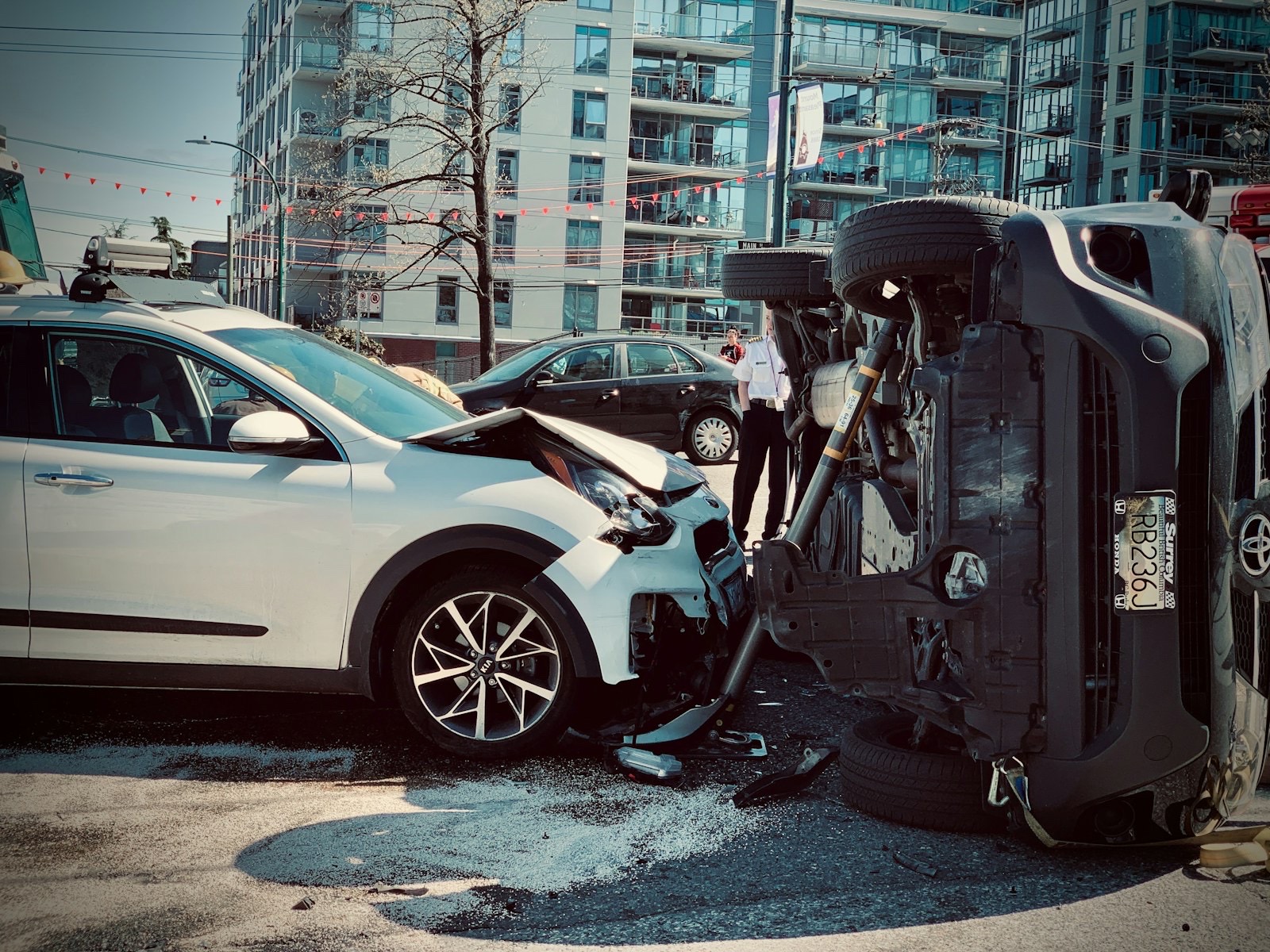
How Much Car Insurance Do You Actually Need?
State minimums are dangerously low almost everywhere. Here's how to set liability, deductibles and uninsured motorist limits to your actual exposure.
State Farm Is Mailing $5 Billion in Dividend Checks to 49 Million Auto Policyholders
The largest dividend in the mutual's history pays 4% to 10% of 2025 premium, about $100 per vehicle on average. Here is who qualifies and how to spot the scams that follow.

Car Insurance Is Rising Again in 32 States After Last Year's 6% Drop
Insurify's mid-year report puts the average full-coverage premium at $2,237, up 1% in the first half of 2026, with repair costs up 45% and Connecticut heading for a 15% jump.