
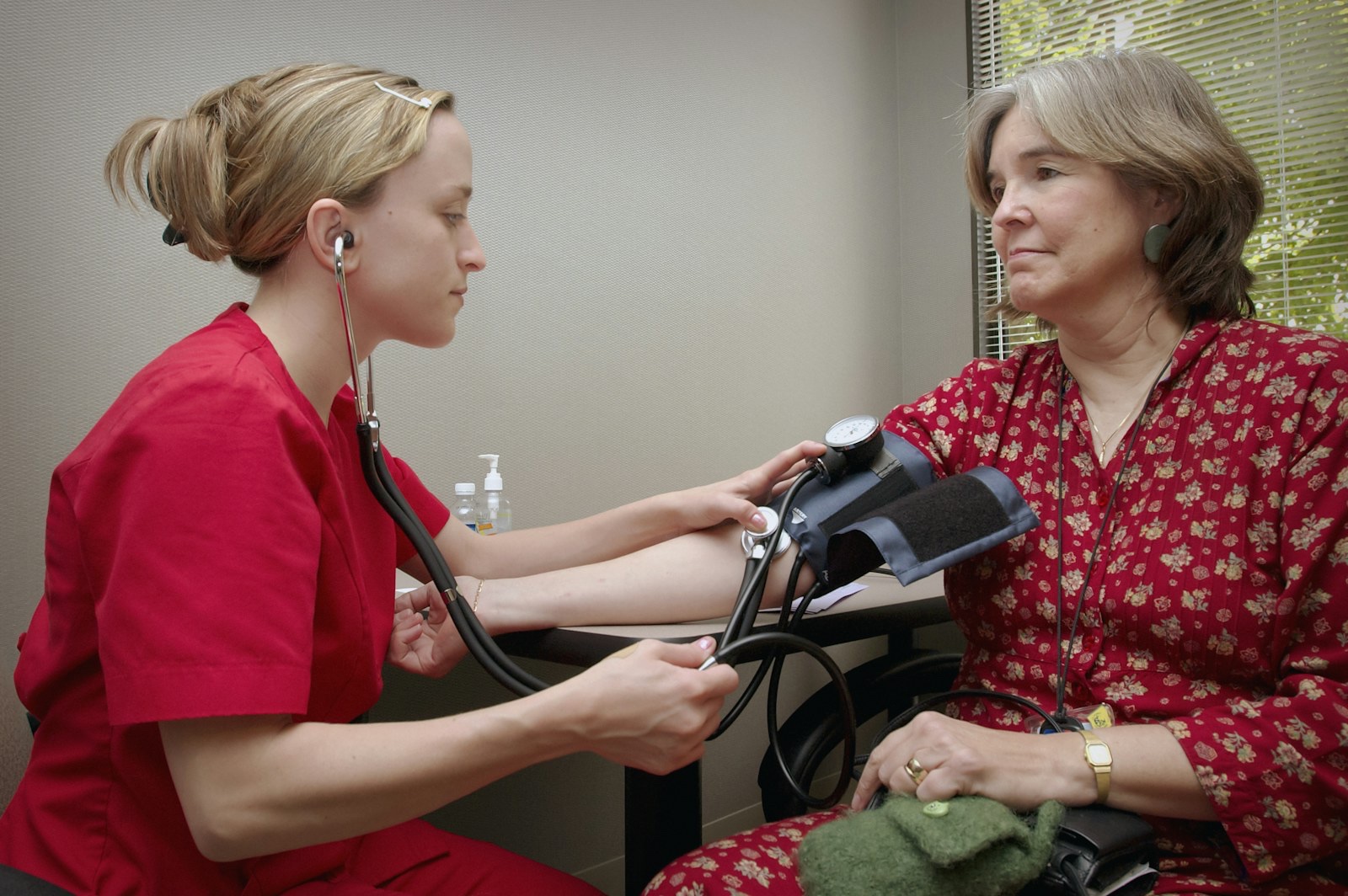
The medical exam is the part of buying life insurance that people dread and misunderstand in equal measure. It’s not a physical, it isn’t performed by your doctor, and it takes about thirty minutes in your kitchen.
It also determines your premium for the entire length of the policy, which makes it worth understanding before you schedule it.
What Actually Happens
A paramedical examiner — usually a nurse or phlebotomist contracted by the insurer — comes to your home or office. They:
- Record height, weight, pulse and blood pressure
- Draw a blood sample
- Collect a urine sample
- Take a health and family history questionnaire
- Sometimes run an EKG, for larger face amounts or older applicants
That’s it. No X-rays, no physical examination in the clinical sense.
What the Bloodwork Looks For
The panel is broader than most applicants expect:
| Marker | What it signals |
|---|---|
| Cholesterol and HDL/LDL ratio | Cardiovascular risk |
| Glucose and HbA1c | Diabetes or pre-diabetes |
| Liver enzymes (ALT, AST, GGT) | Alcohol use, liver disease |
| Creatinine and BUN | Kidney function |
| Cotinine | Nicotine use, including vaping |
| HIV and hepatitis | Infectious disease |
| Proteins and PSA | General and prostate health |
Two of these deserve specific attention.
Cotinine. This detects nicotine, not just cigarettes. Vaping, patches, gum and cigars all register. Smoker rates typically run two to three times non-smoker rates, so this single marker can double your premium. Insurers generally require 12 months nicotine-free to qualify for non-smoker rates.
Liver enzymes. Elevated GGT in particular is read as a marker of alcohol consumption. Heavy drinking in the week before the exam can move these numbers meaningfully.
How the Result Becomes a Price
Insurers sort applicants into rate classes. The naming varies by carrier, but the structure is consistent:
- Preferred Plus — the healthiest few percent. Ideal build, clean bloodwork, no family history of early cardiac or cancer deaths.
- Preferred — very good health with a minor flag.
- Standard Plus — better than average.
- Standard — average for your age.
- Substandard / Table ratings — a specific condition prices you above standard, in graduated tables.
The gap between Preferred Plus and Standard is commonly 40-60% on the same face amount. On a $1 million 20-year term policy, that can be $400-$700 a year for two decades.
How to Prepare
You cannot fake your way into a better rate class, but you can avoid an artificially bad reading:
- Schedule the exam for early morning and fast for 8-12 hours beforehand. Non-fasting glucose and lipid numbers read worse.
- Skip alcohol for 72 hours. Liver enzymes respond quickly.
- Skip the workout that morning. Intense exercise elevates creatinine and can produce protein in urine, both of which look like kidney problems.
- Avoid caffeine and nicotine for a few hours before. Both raise blood pressure at the moment of measurement.
- Drink water. Dehydration concentrates everything and makes the blood draw harder.
- Have your medication list and doctors’ contact details ready. Guessing at dosages creates discrepancies with your medical records, which triggers follow-up questions and delays.
None of this is gaming the system. It’s ensuring the sample reflects your normal state rather than a bad Tuesday.
When to Skip the Exam Entirely
No-exam policies — accelerated underwriting, simplified issue, guaranteed issue — have expanded substantially and now cover meaningful face amounts. They’re worth considering when:
- You need coverage immediately. Full underwriting takes 4-8 weeks; accelerated underwriting can approve in days.
- You have a needle phobia or a scheduling problem that would otherwise mean no coverage at all. An in-force policy at a worse rate beats an unbought policy at a better one.
- You’re young and healthy and the price gap is small. Some carriers now price accelerated underwriting close to fully underwritten for low-risk applicants.
The trade-off is real, though. No-exam policies typically cost more for the same coverage, cap the face amount lower, and may still ask detailed health questions. “No medical exam” does not mean “no health questions” — several carriers marketed as no-exam still decline applicants based on the questionnaire and prescription database checks.
The Thing Nobody Mentions
The insurer checks the MIB (Medical Information Bureau), your prescription history and often your motor vehicle record regardless of whether you take an exam. Omitting a condition on the application doesn’t hide it; it creates a misrepresentation that can void the policy during the contestability period — typically the first two years. Answer accurately.
For how much coverage to buy in the first place, see how much life insurance you actually need.